A skincare routine can include cleansers, moisturisers, serums, and treatments, but one important step is often overlooked: daily sun protection. People dealing with dark spots or uneven skin tone may spend time choosing brightening products while forgetting that regular sun exposure can make pigmentation more noticeable.
Using Pigmentation sunscreen consistently helps protect the skin from UV exposure that contributes to tanning and dark spots. The challenge is not simply finding a suitable product. It is making sunscreen a habit that fits into your everyday schedule.
Why Everyday Activities Expose Your Skin to Sunlight
You do not need to spend an entire afternoon at the beach to experience UV exposure. Many routine activities involve time outdoors.
- Walking to a bus stop or metro station.
- Travelling to work or college.
- Shopping in open markets.
- Sitting near sunny windows.
- Running errands during lunch breaks.
- Driving or riding a two-wheeler.
These short periods can add up throughout the day. Regular protection is therefore important even when outdoor exposure is limited to everyday activities.
Build a Morning Routine You Can Follow
A complicated skincare routine can become difficult to maintain. Keep your morning steps simple so that sunscreen does not become an occasional product.
Start With Gentle Cleansing
Wash your face with a cleanser suitable for your skin type. This removes excess oil, sweat, and dirt collected overnight.
Avoid harsh cleansing products that leave your skin feeling tight or uncomfortable.
Apply Your Regular Skincare Products
If you use a moisturiser or a brightening serum, apply it according to its instructions. Ingredients such as niacinamide, vitamin C, and Alpha Arbutin are commonly included in routines focused on improving the appearance of uneven skin tone.
Introduce new products gradually, especially if your skin is sensitive.
Finish With Sunscreen
Apply Pigmentation sunscreen as the final step of your morning skincare routine. Cover your face, neck, ears, and other exposed areas.
Follow the product directions for application timing and quantity. Applying sunscreen unevenly or using too little can reduce the protection you receive.
Choose a Formula That Fits Your Lifestyle
The best sunscreen for a daily routine is one you can apply comfortably and consistently. Texture, finish, and skin compatibility can influence how regularly you use it.
For office workers: A lightweight formula can fit easily into a morning routine before commuting.
For students: A comfortable sunscreen is useful when moving between classrooms, outdoor areas, and public transport.
For people who travel frequently: A portable product makes it easier to maintain sun protection away from home.
For oily skin: Look for a formula that does not feel excessively greasy.
For dry skin: A moisturising texture may feel more comfortable throughout the day.
A product labelled SPF 50 with PA++++ offers strong UVB protection and a high level of UVA protection. Both are relevant when trying to reduce the impact of sun exposure on uneven skin tone.
Do Not Forget Sunscreen Reapplication
Applying sunscreen in the morning is only the beginning. Protection can decrease with sweating, swimming, wiping, and extended outdoor exposure.
Keep these habits in mind:
- Reapply approximately every two hours when spending extended time outdoors.
- Reapply after swimming or heavy sweating.
- Apply again after wiping your face with a towel.
- Pay attention to exposed areas such as the forehead, cheeks, neck, and hands.
- Use a hat, sunglasses, or protective clothing when possible.
If you work indoors most of the day, your routine may differ from someone who spends several hours outside. However, regular exposure and time near sunny windows are still worth considering.
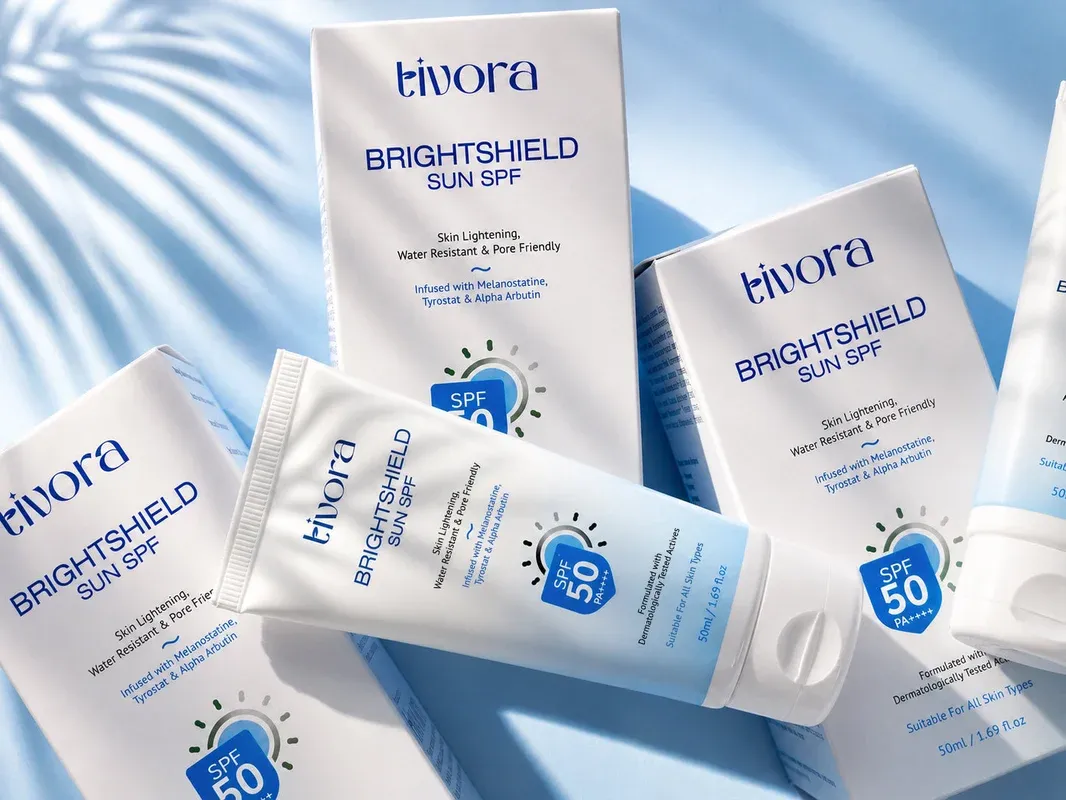
Introducing Tivora BrightShield SPF 50 PA++++
Tivora BrightShield SPF 50 PA++++ is an option for people who want daily sun protection alongside their skincare routine. Its formula includes Alpha Arbutin, Tyrostat, and Melanostatin, ingredients associated with brightening-focused skincare formulations.
The lightweight formula is designed to avoid a visible white cast, making it a practical option for everyday use. It can be applied before leaving home and reapplied as needed according to outdoor exposure and product directions.
Remember that sunscreen protects against UV exposure; it should not be treated as a standalone cure for existing pigmentation.
Mistakes That Make Daily Sun Care Less Effective
Even a suitable sunscreen cannot help much if the application routine is inconsistent.
Avoid these common mistakes:
- Applying sunscreen only when the sun feels strong.
- Skipping it during cloudy weather.
- Covering only the centre of the face.
- Using an insufficient amount.
- Forgetting the neck and ears.
- Assuming one morning application lasts throughout the day.
- Expecting dark spots to disappear within a few days.
Pigmentation can have several causes, including hormonal changes, acne, inflammation, and sun exposure. Persistent or worsening concerns may require advice from a dermatologist.
Final Thoughts
Managing uneven skin tone requires consistency rather than a collection of complicated skincare products. Adding Pigmentation sunscreen to your morning routine and reapplying it when necessary helps reduce the impact of daily UV exposure.
Choose a comfortable formula, apply it correctly, and combine it with sensible sun-protection habits. A routine that you can follow every day is more useful than an elaborate routine that you regularly skip.